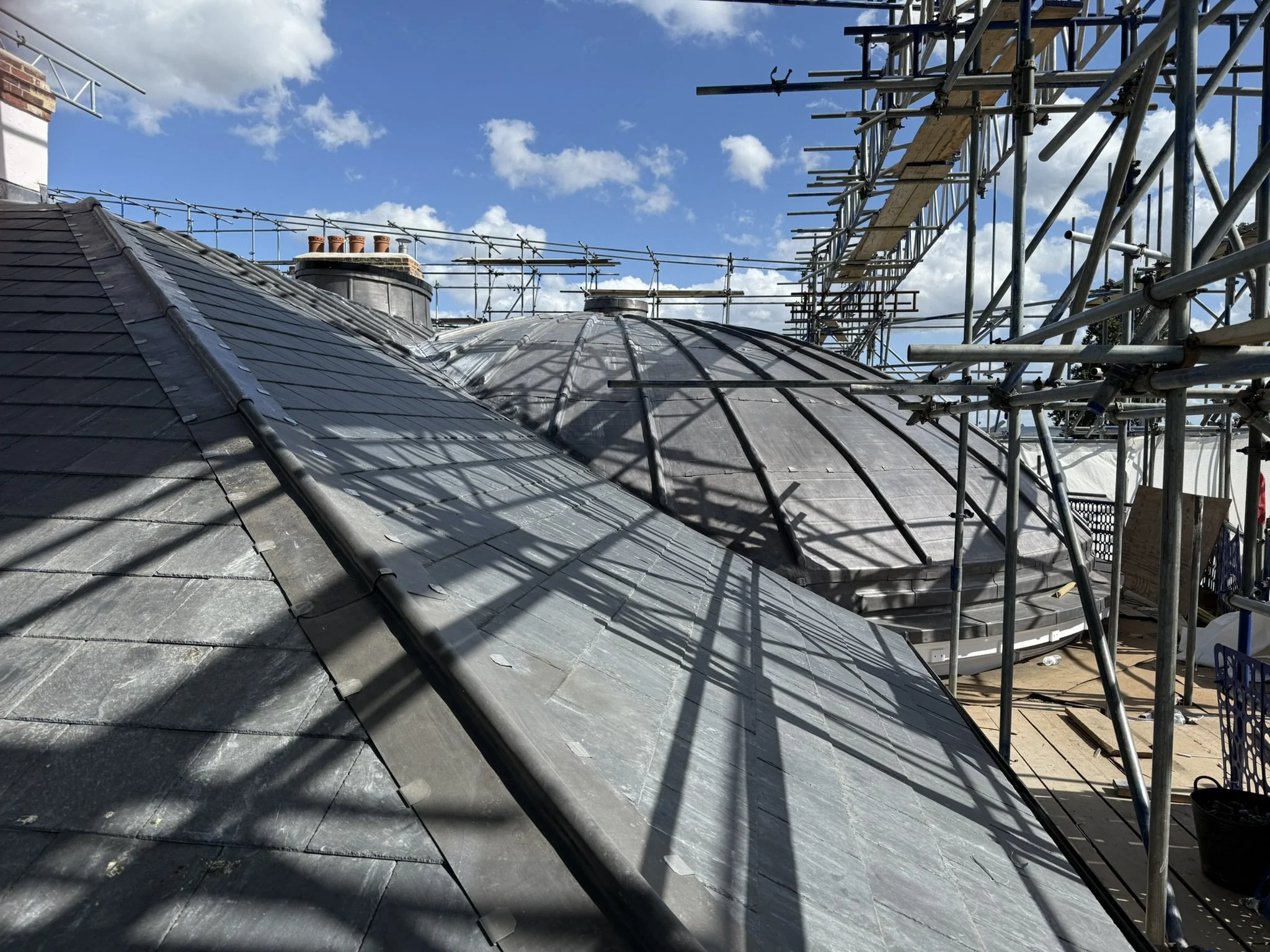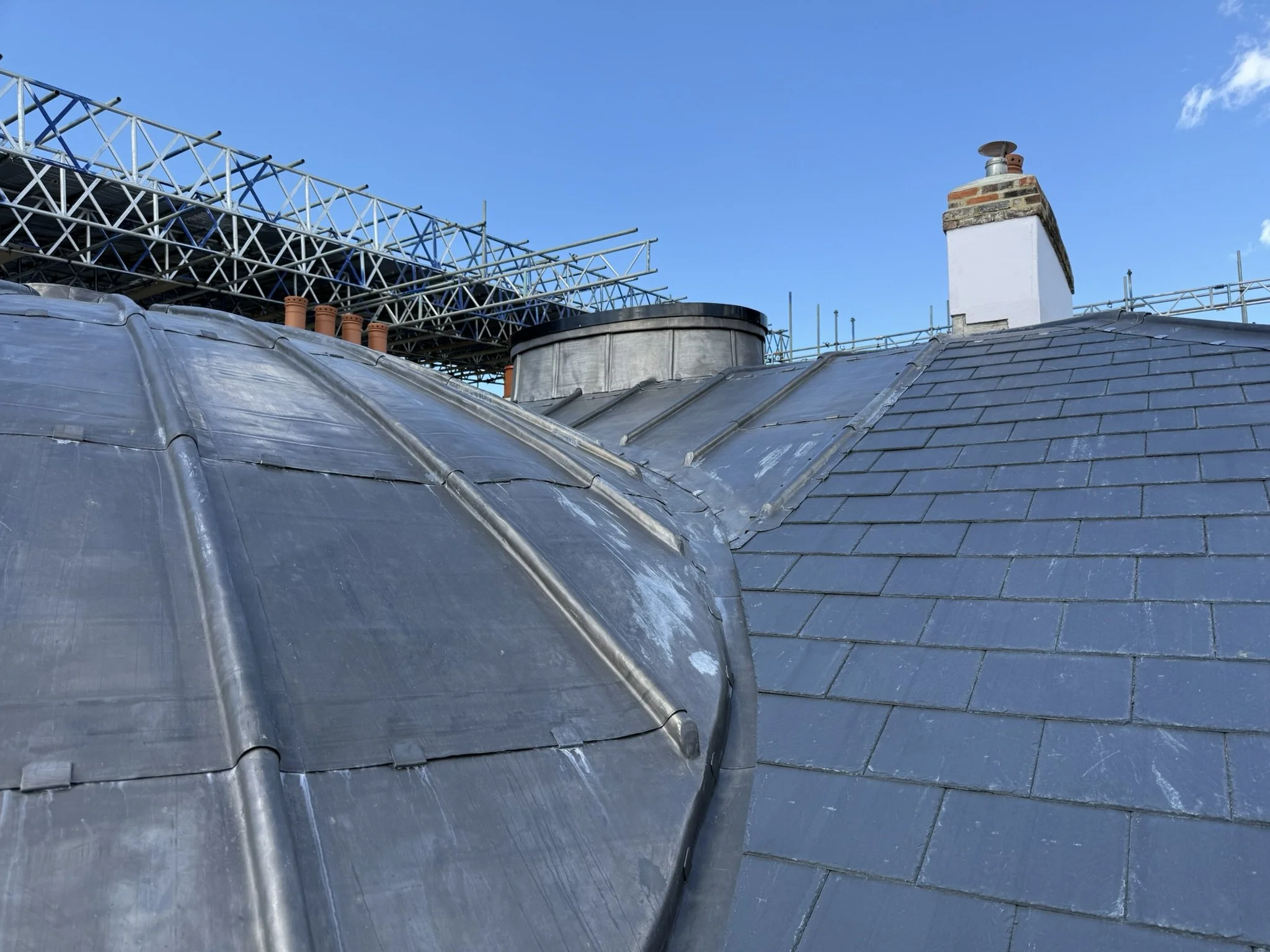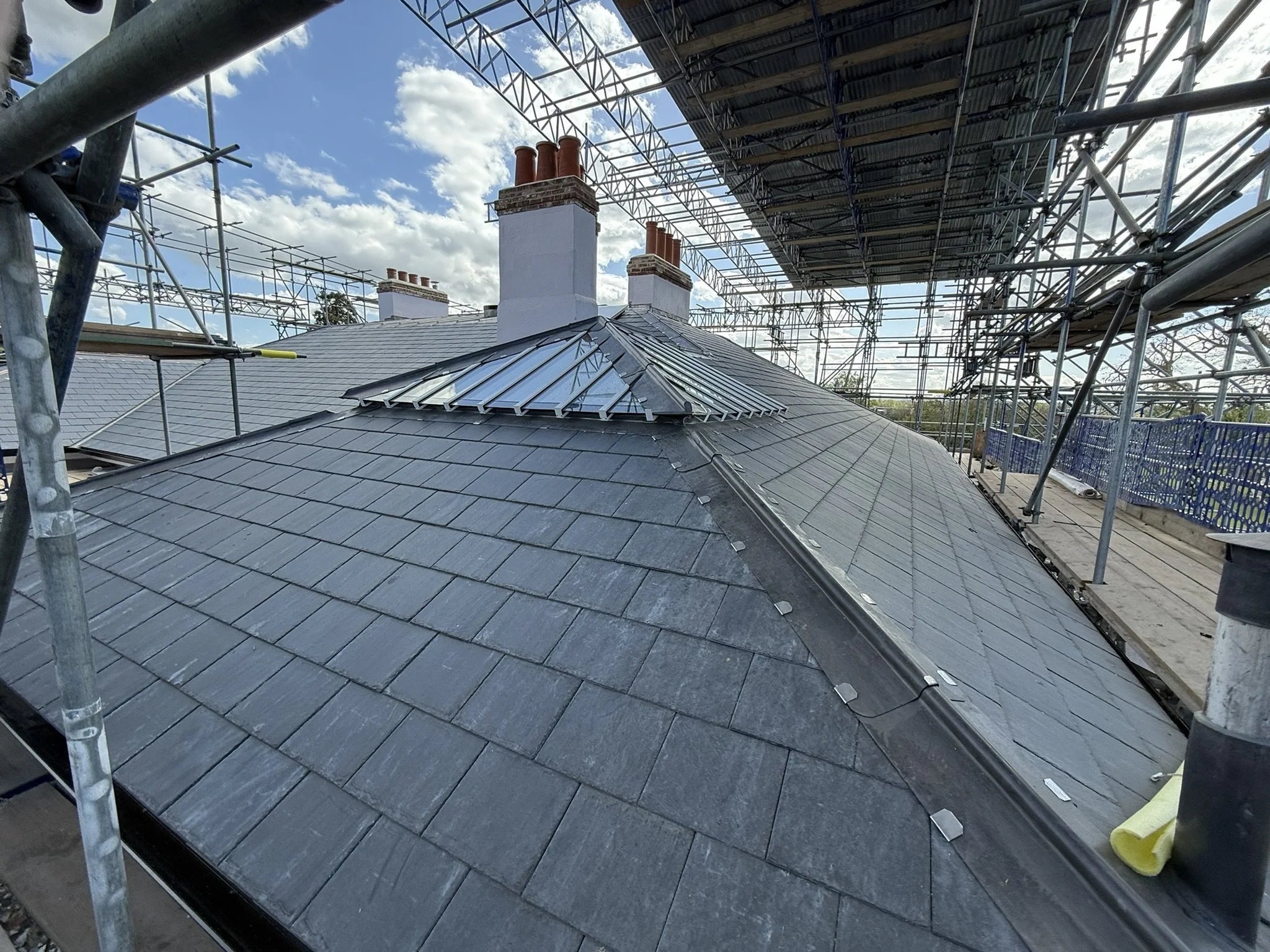
Project Showcase - Hoe Bridge School, Woking
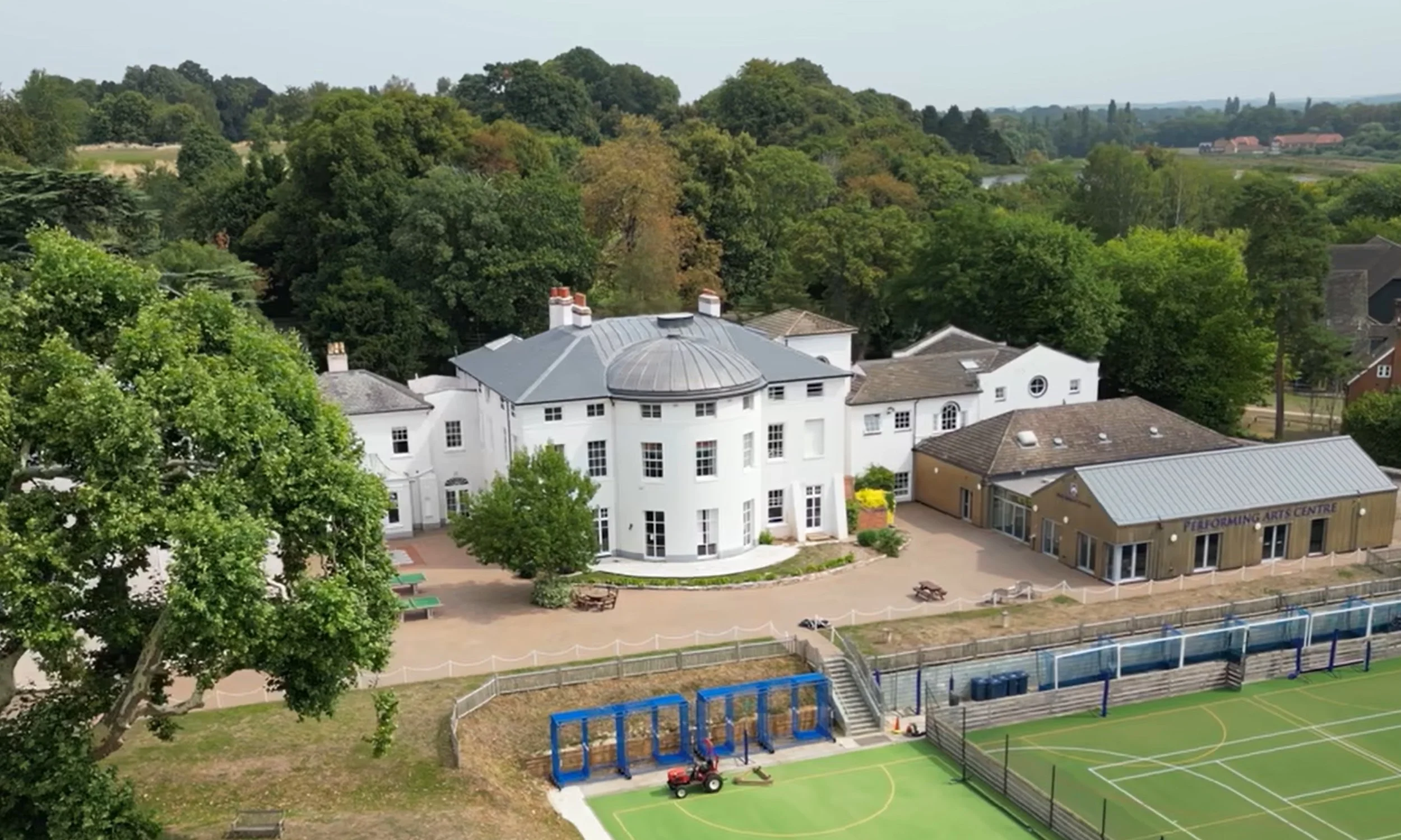
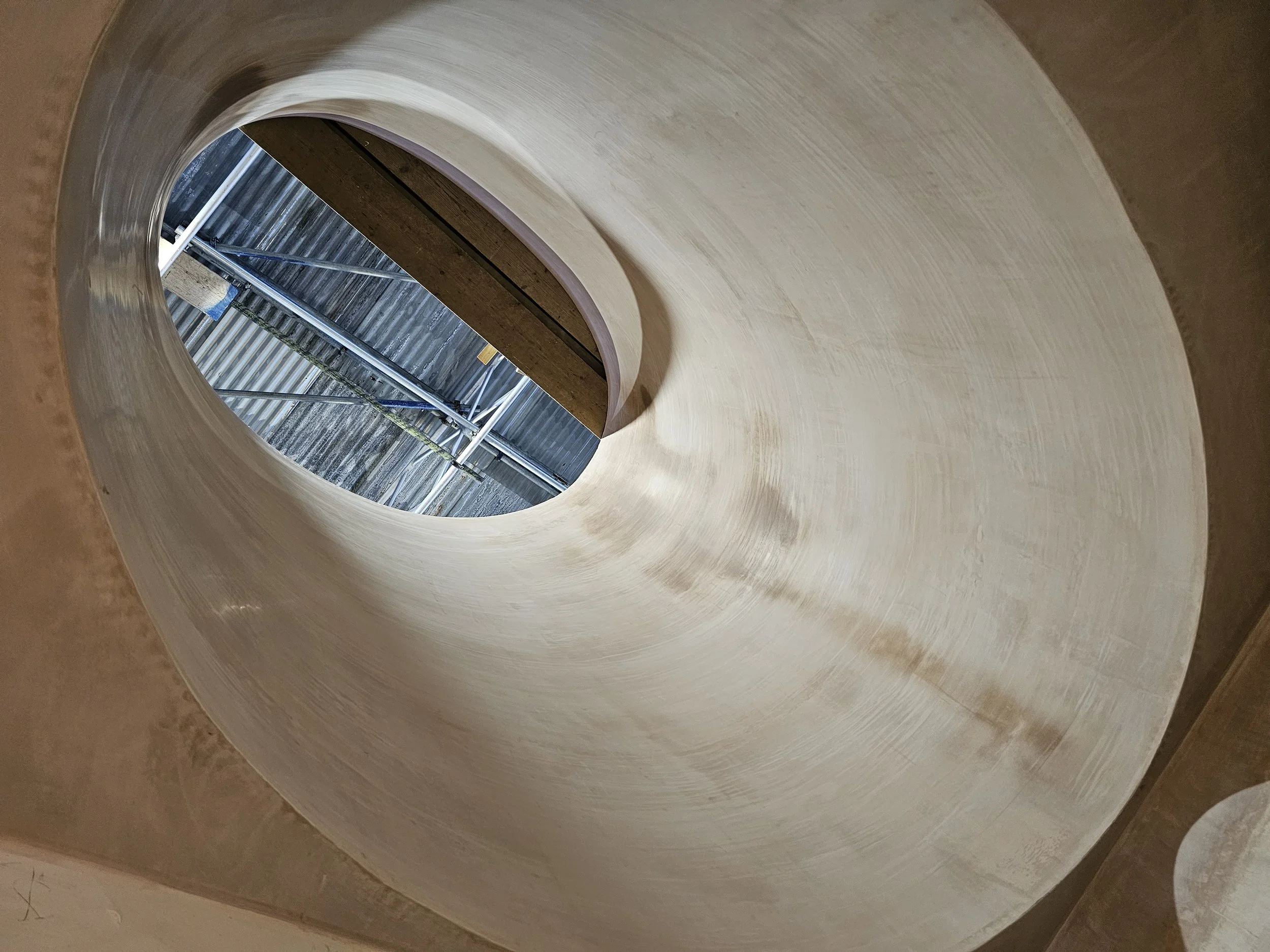
Hoe Bridge School sits within 22 acres on the outskirts of Woking. Among its historic buildings are two statutorily listed structures: Hoe Place (Grade II*) and the Chapel (Grade II). These buildings form part of a wider historic setting, but it is Hoe Place that holds particular significance due to what lies inside.
Paintings of national importance
The Grade II* listing of Hoe Place is largely attributed to its internally painted walls and ceilings, most notably within the Main Stairwell and the Headmaster’s Study.
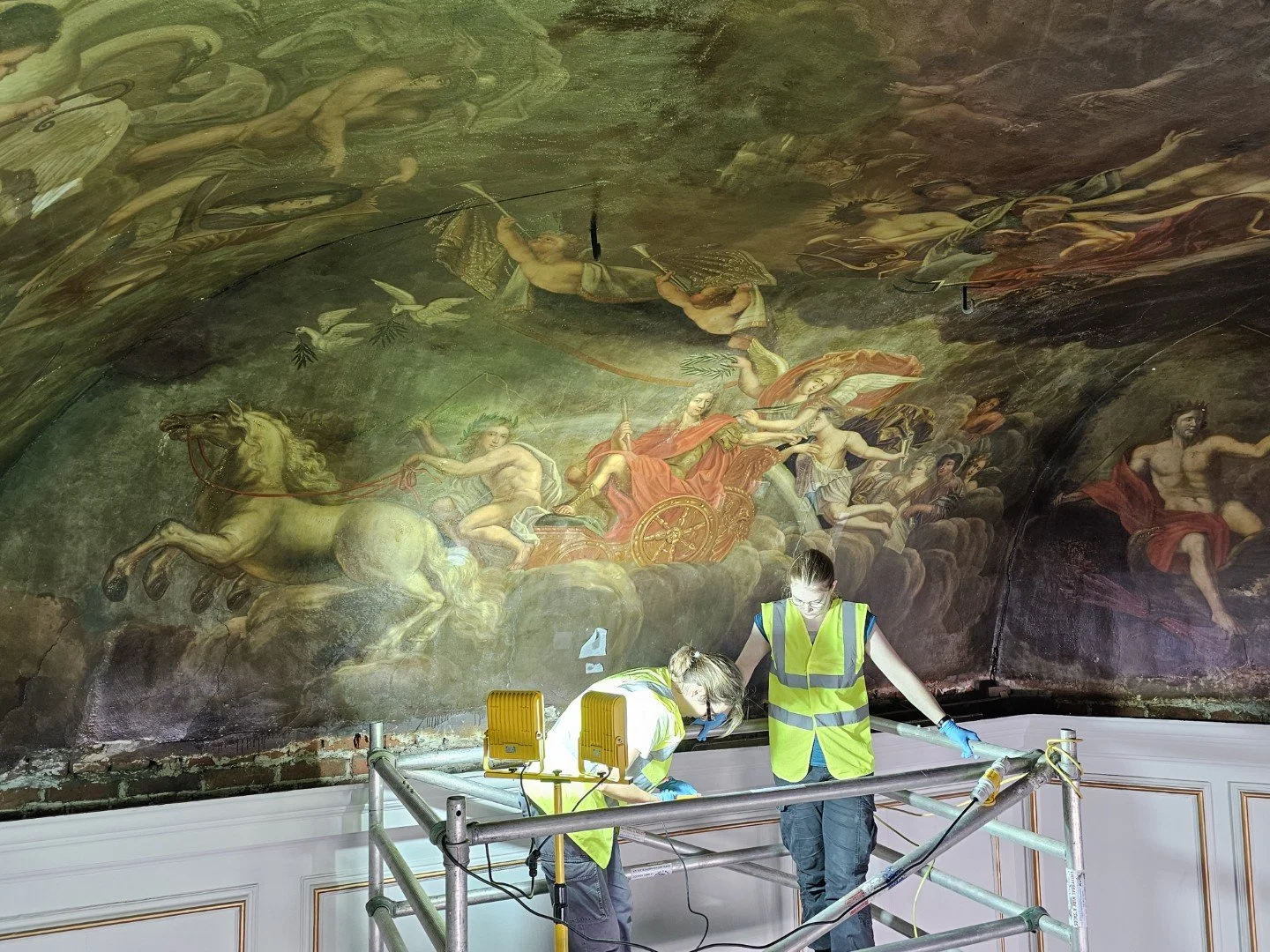
These works are thought to be in the style of Pierre Mignard, Antoine Coypel and Veronese, and are considered to be of significant national importance. They are believed to reflect works lost in the Windsor Castle fire and have previously been described as being worth “millions of pounds”. Restoration efforts were undertaken in the 1950s, but it was later discovered that the structure supporting the paintings had become compromised, leaving them in a state of temporary balanced equilibrium.
The Baroque wall paintings, although darkened by varnish, depict scenes including Venus and Mars discovered by Vulcan, Apollo descending from a cloudscape, and the Forge of Venus. In the Headmaster’s Study, a former bedchamber, the painted ceiling remains in better condition. It features an assembly of the gods alongside scenes adapted from 1670s works by Verrio, originally created for royal interiors at Hampton Court and Windsor.
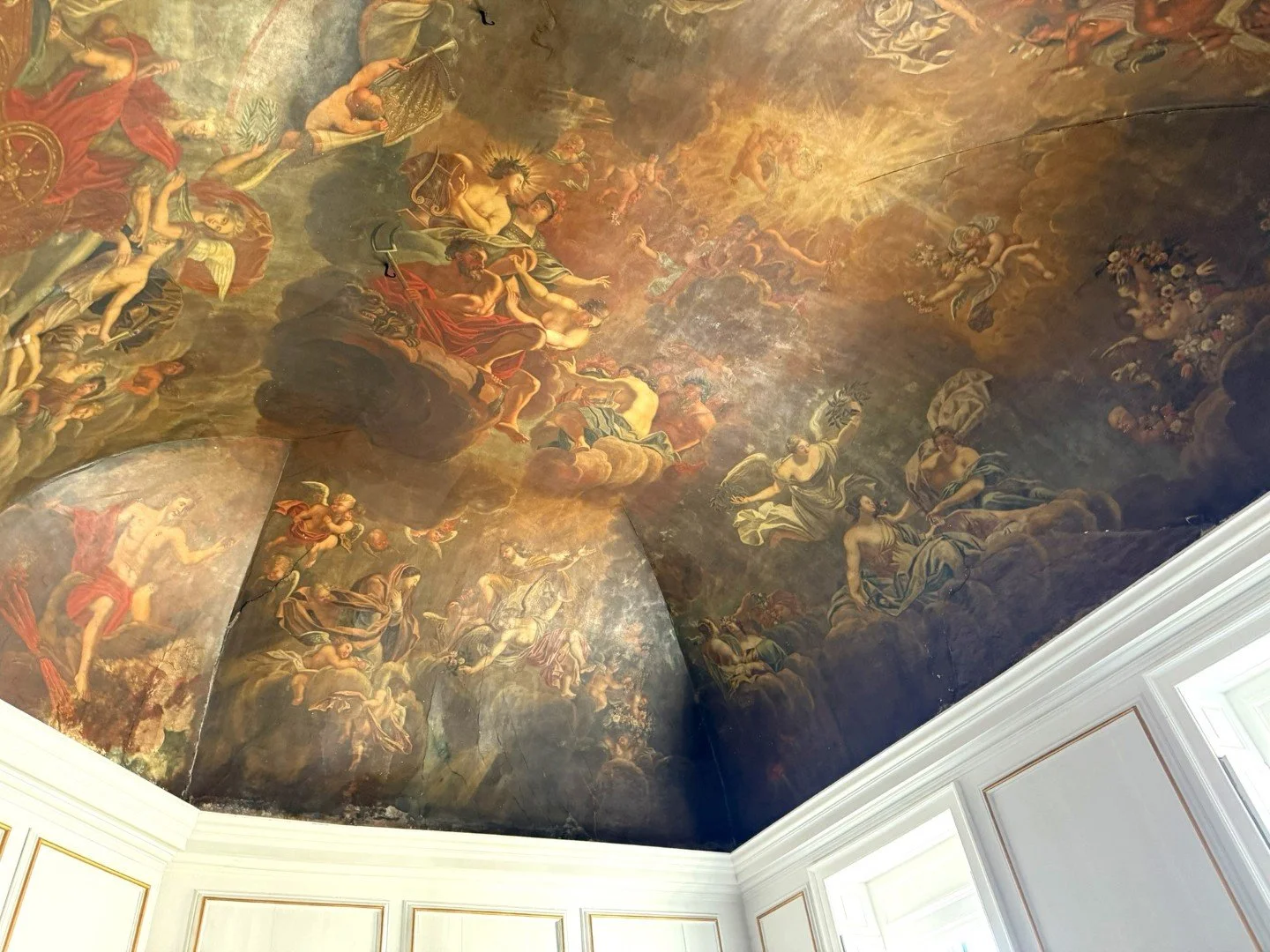
Headmaster’s Study
The start: risk of collapse
Following our involvement in rebuilding the historic main Hoe Place staircase in late 2021/2022, we were asked to investigate a water leak around the oval skylight. On accessing the attic space for the first time, several issues became immediately apparent.
These concerns were not limited to water ingress. Significant structural issues were identified, raising serious concerns about the stability of the roof and the safety of the painted ceilings below.
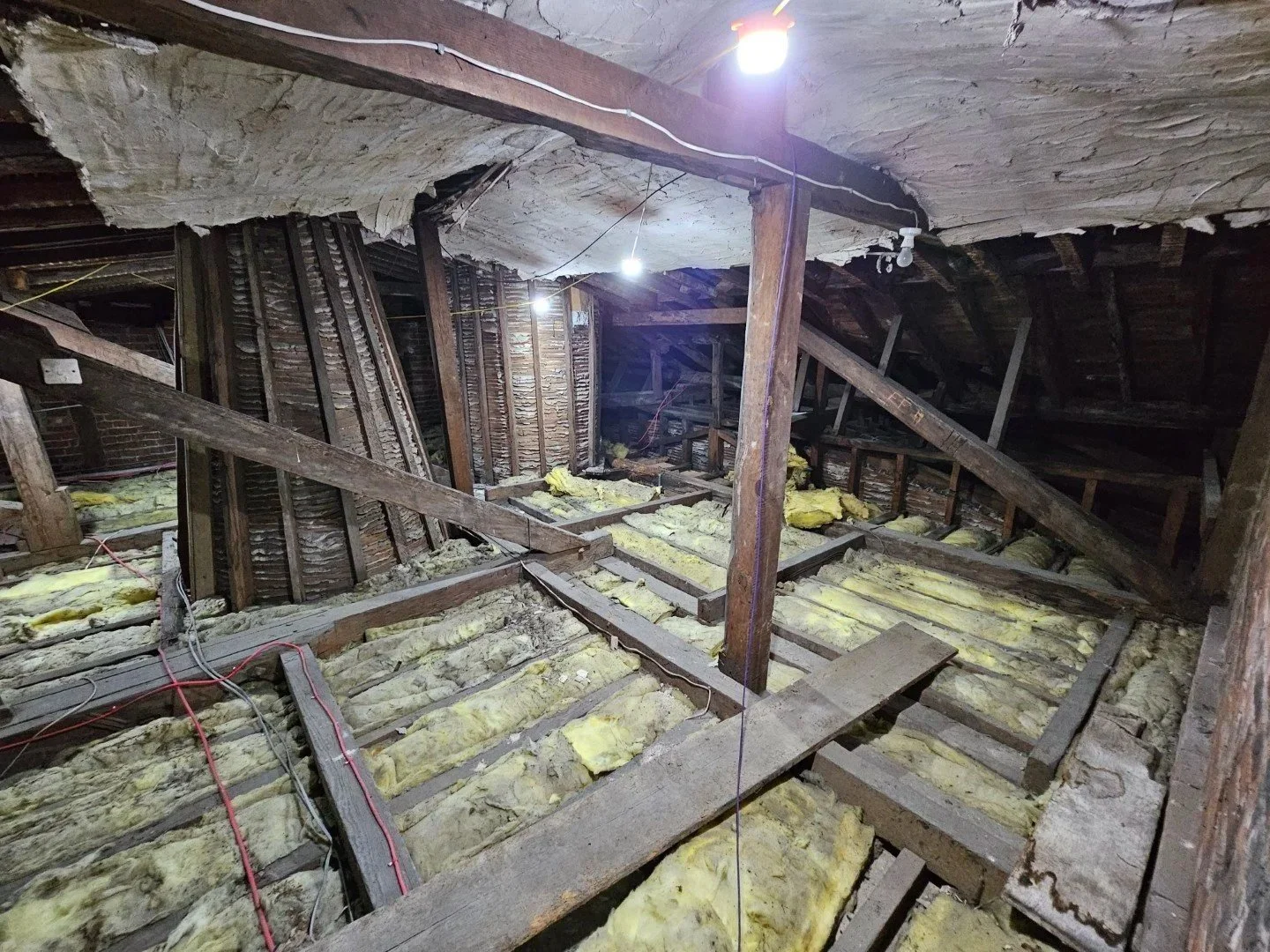
Roof space
Survey findings
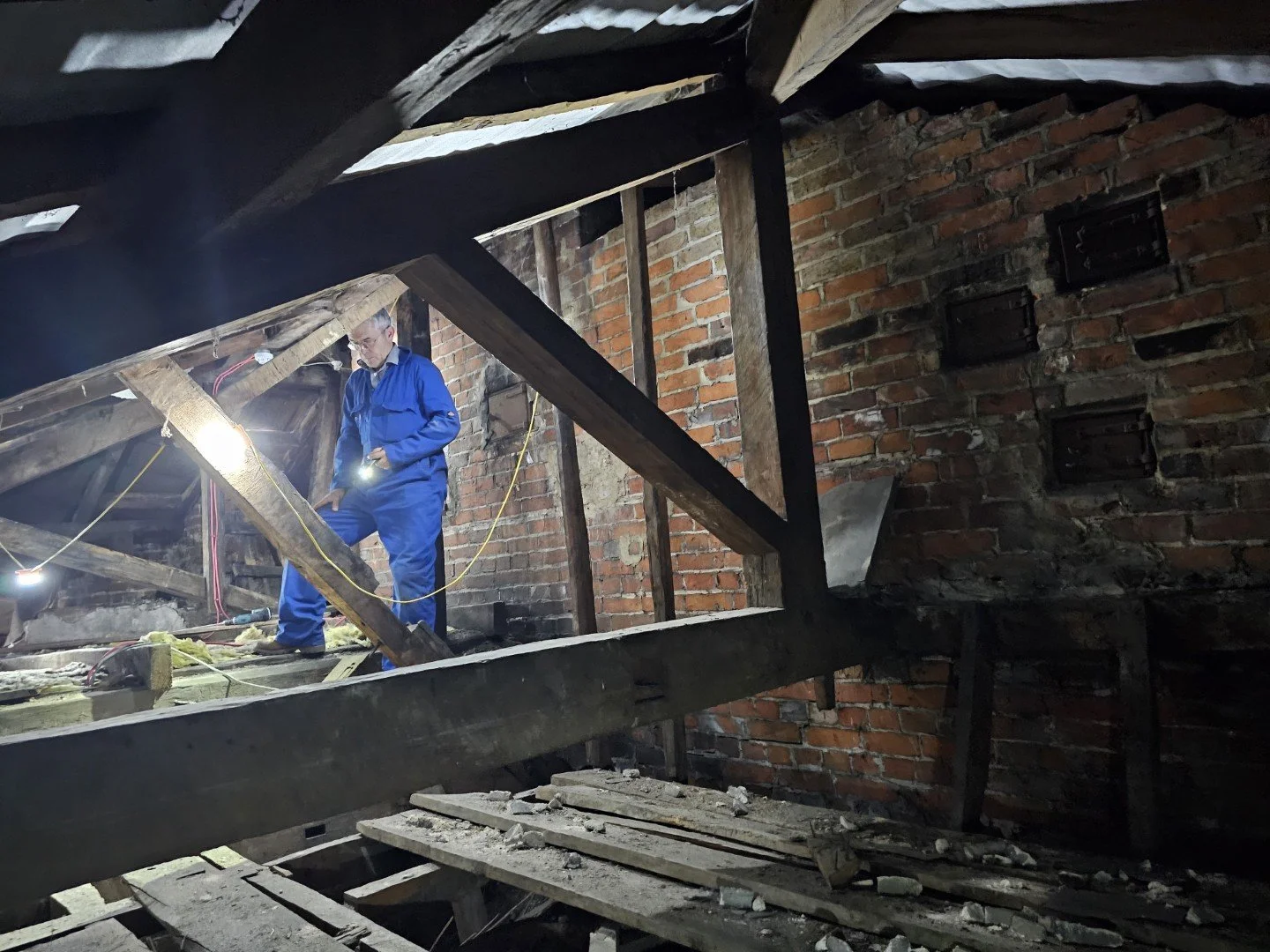
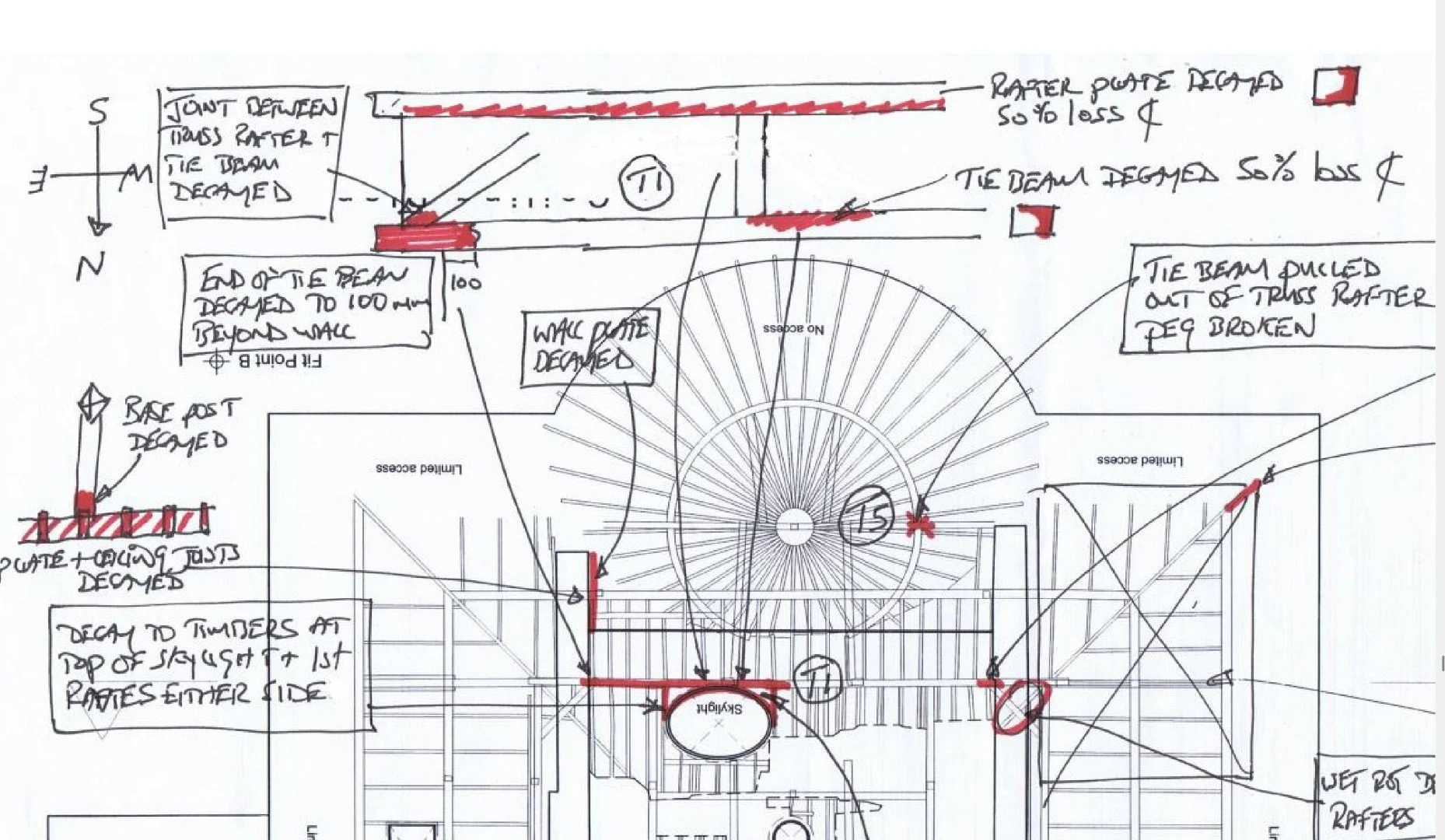
A detailed timber survey revealed multiple areas of immediate concern, including:
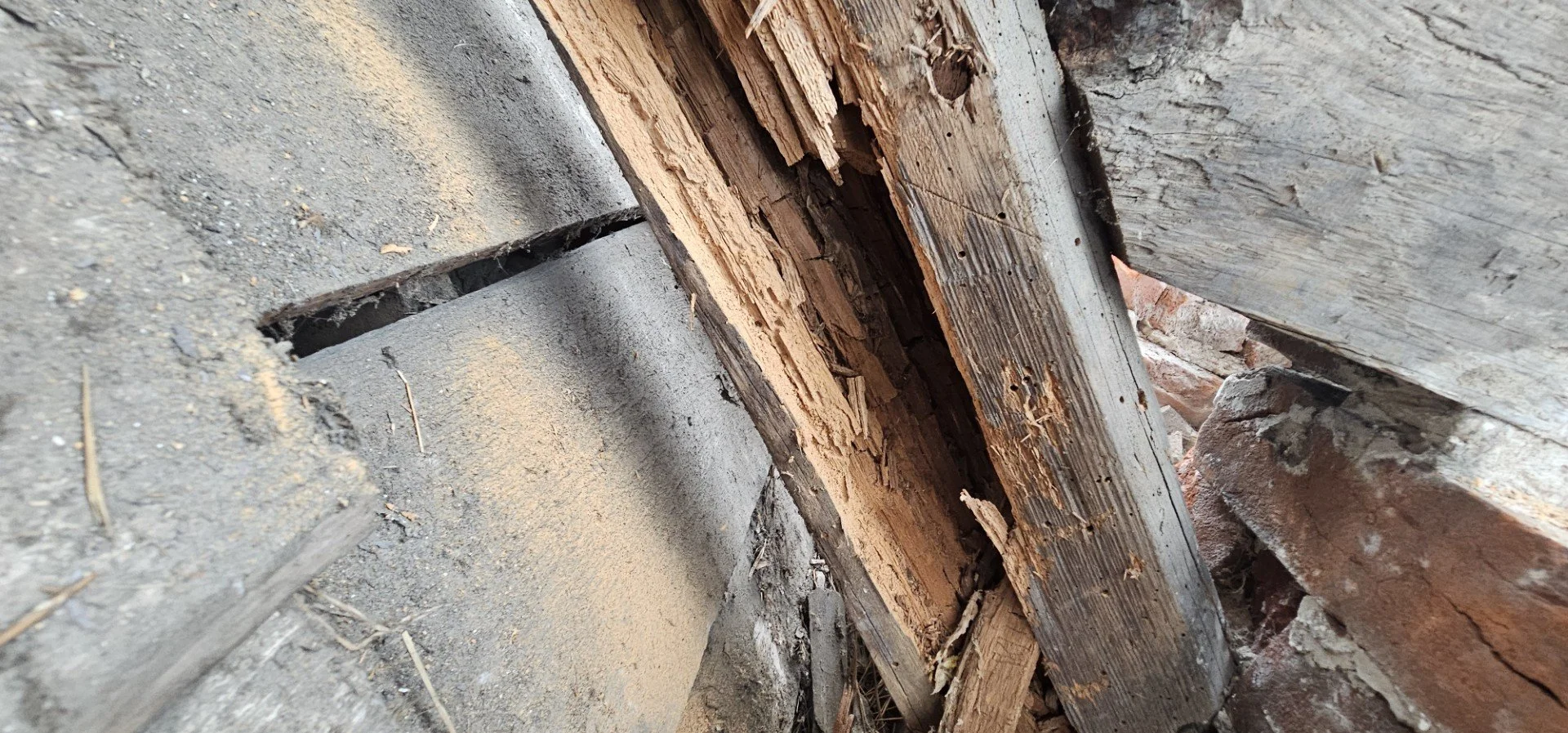
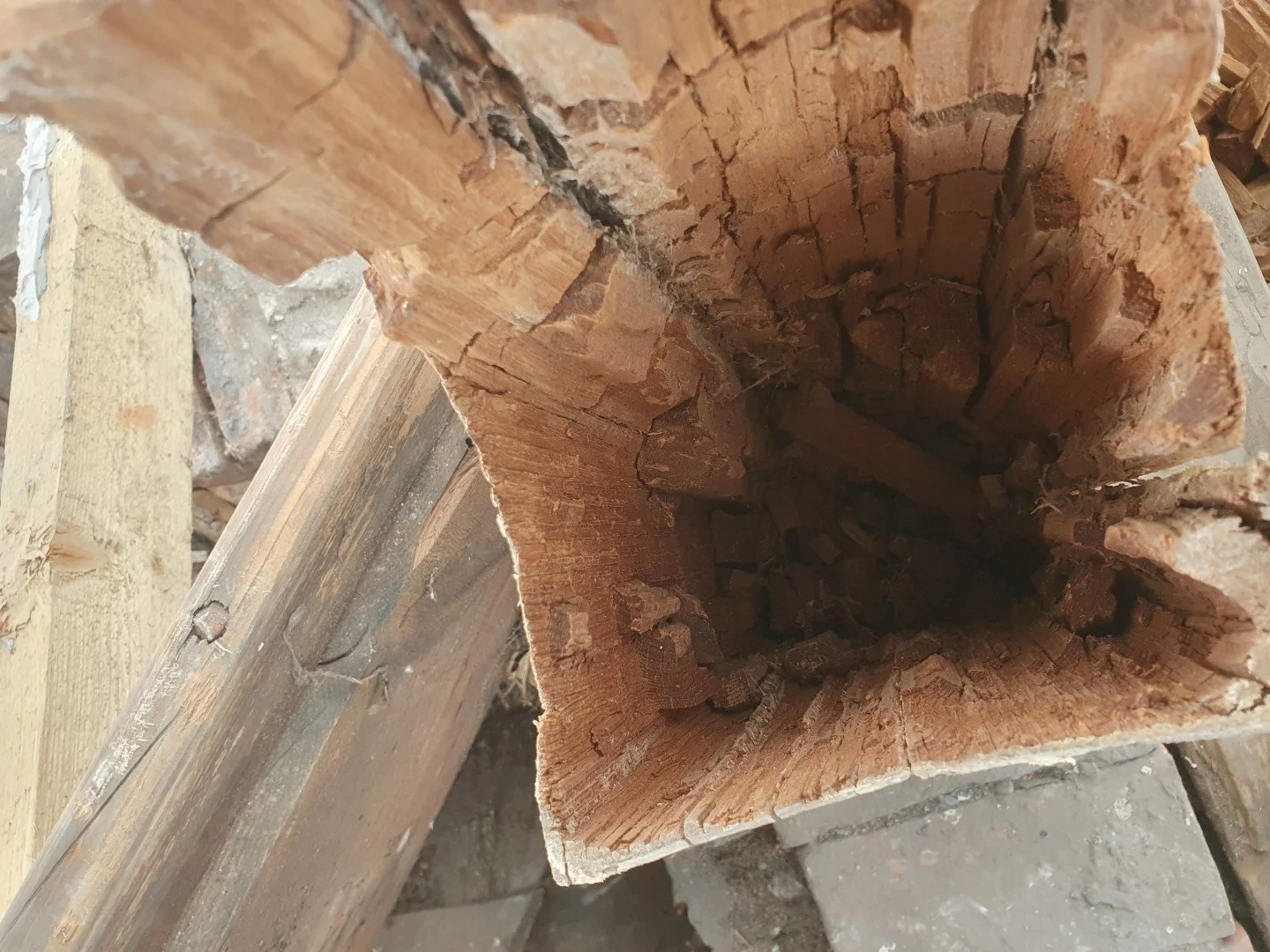
Severe decay at the ends of principal rafters and trusses
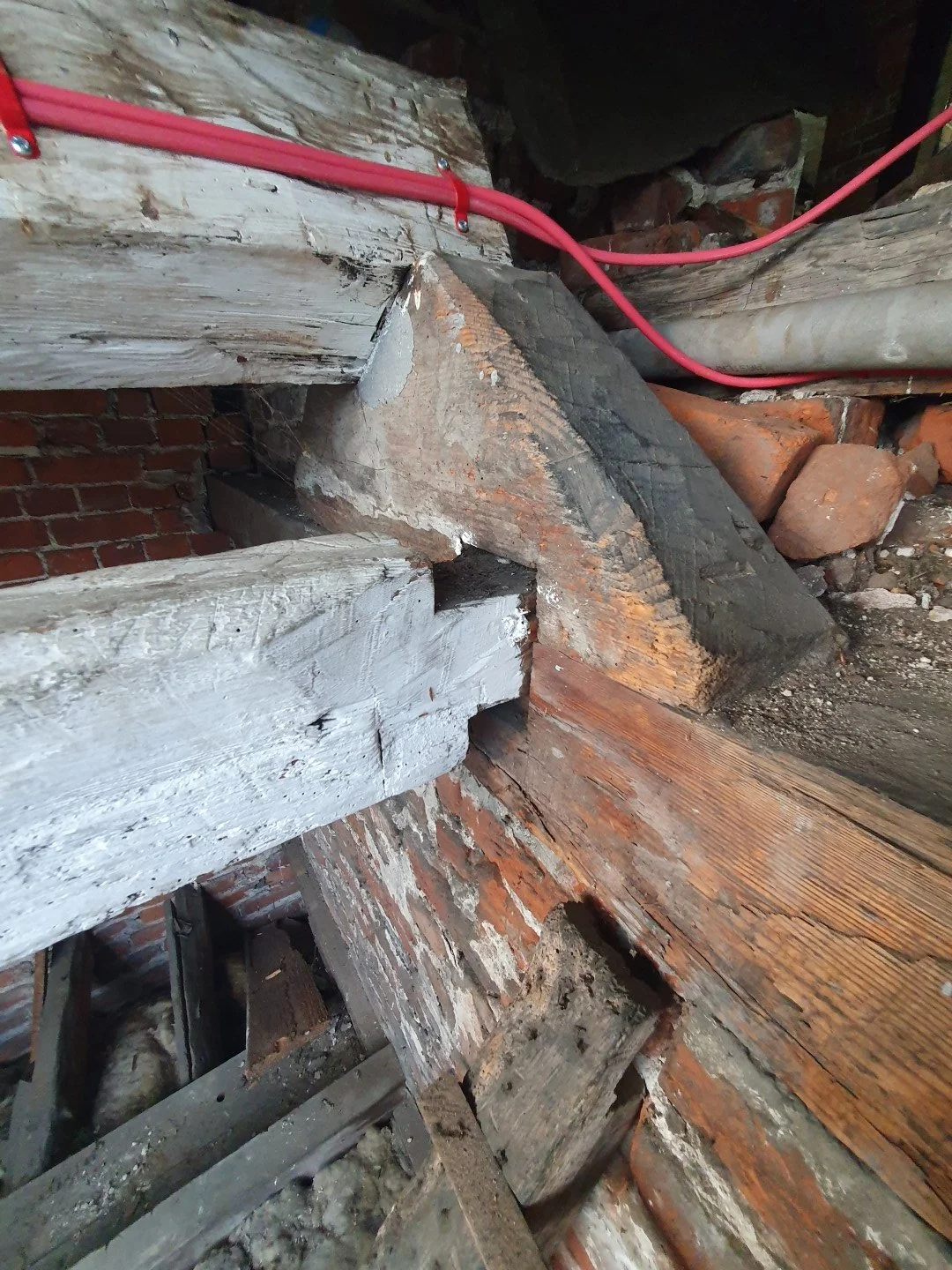
An unsupported hip rafter at its connection to external walls
A 50% loss of sectional area in a principal tie beam
The most critical findings were located above the Headmaster’s Study. Here, the roof and ceiling structure showed:
Overstressed and poorly spaced timbers
Numerous failed and pulled-out joints
Adaptations to the historic roof structure
A poorly supported boarded “floor” deemed unsafe
Together, these issues highlighted the growing risk of catastrophic failure of the painted ceiling below.
Temporary works and access
Following stabilisation, design work progressed to support a listed building application and the appointment of Kingerlee Construction to deliver the strengthening works.
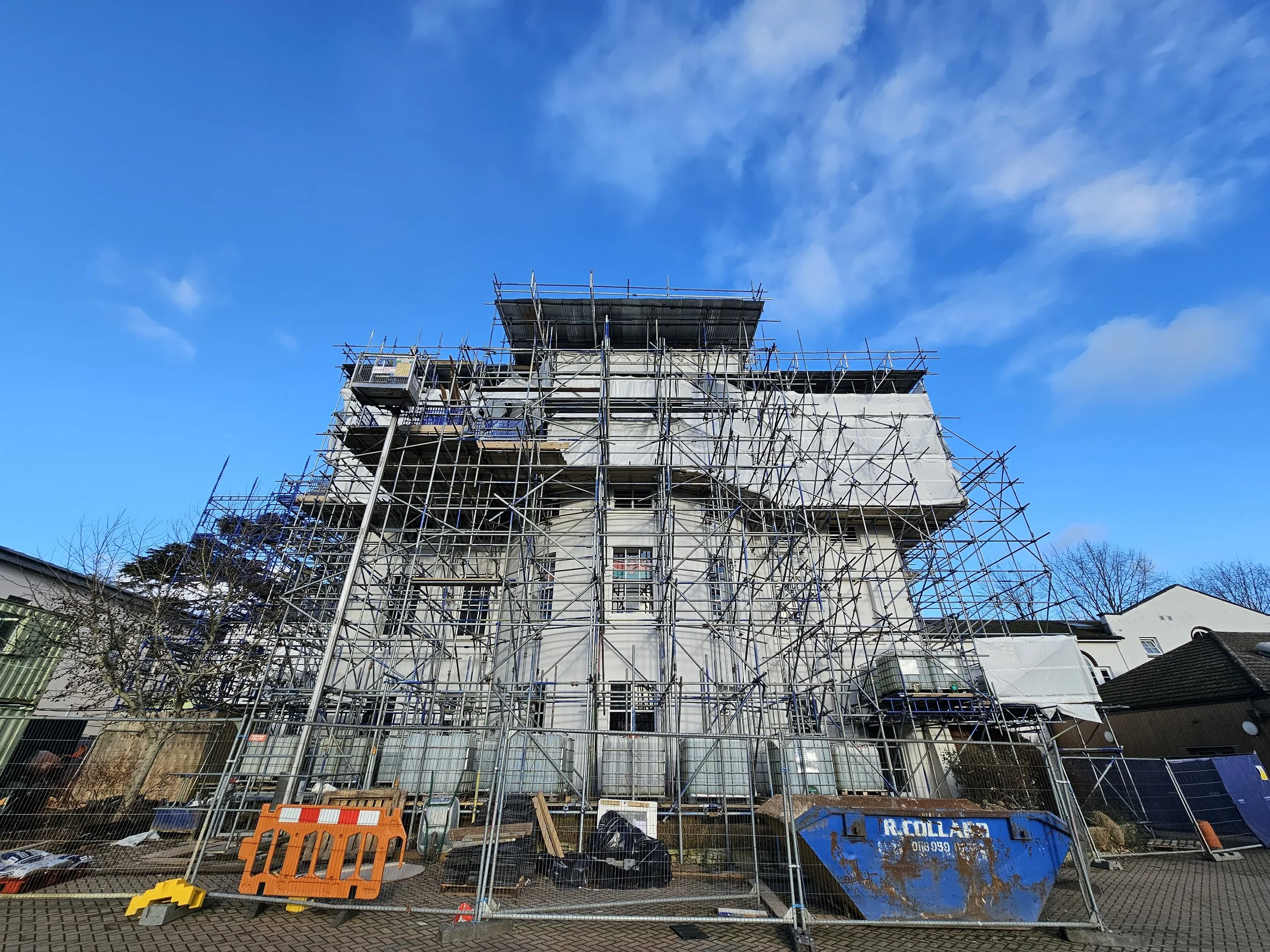
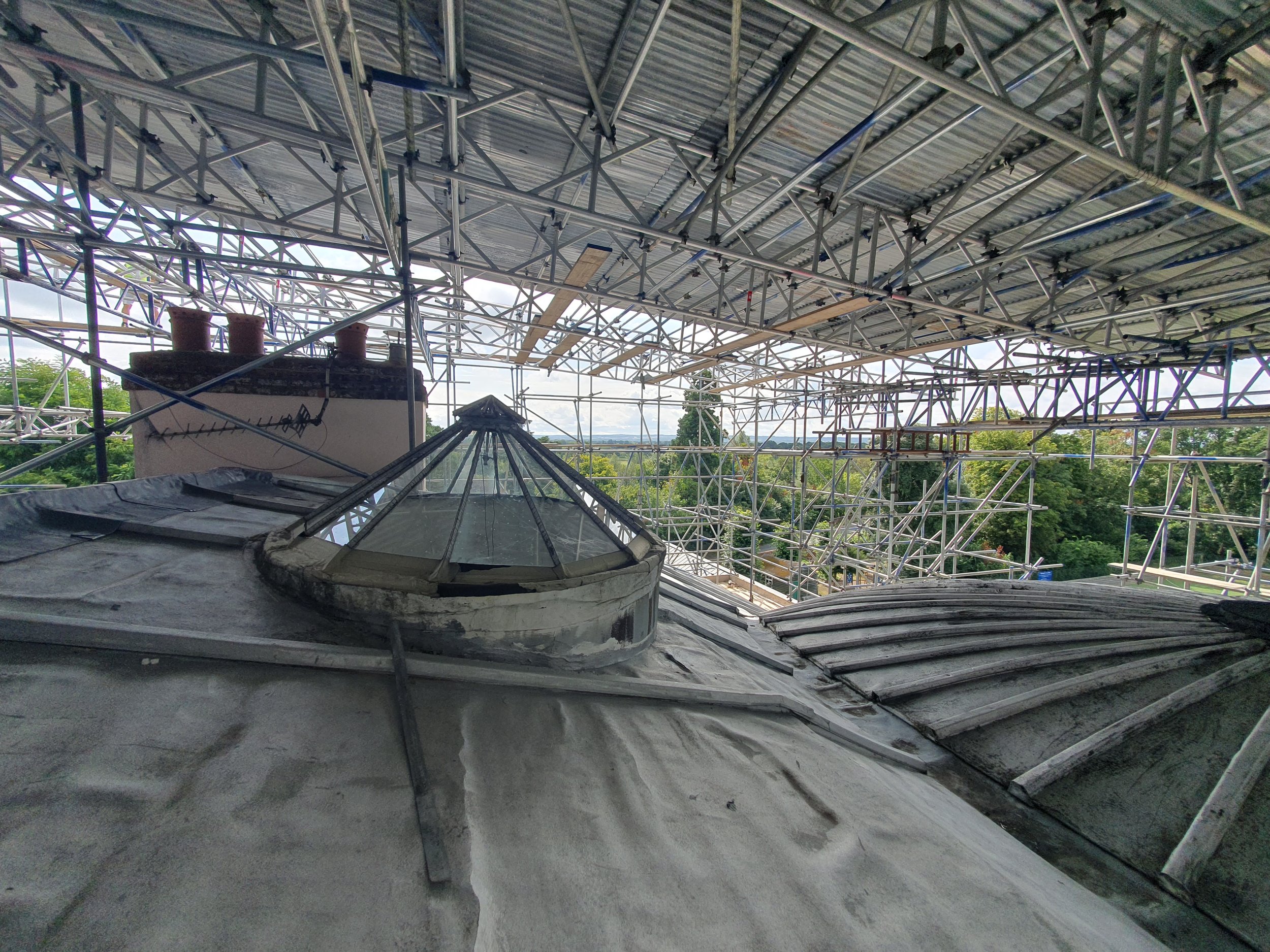
A key early step was the installation of an access and temporary roof scaffold. This provided:
Safe access through the unstable roof structure to allow inspections
Protection from weather during investigation and works
A platform for introducing new structural elements
As the extent of the issues became clearer, the scaffold was extended to span the entire Hoe Place roof.
Protecting the painted ceilings
Preserving the painted ceilings was central to the project.
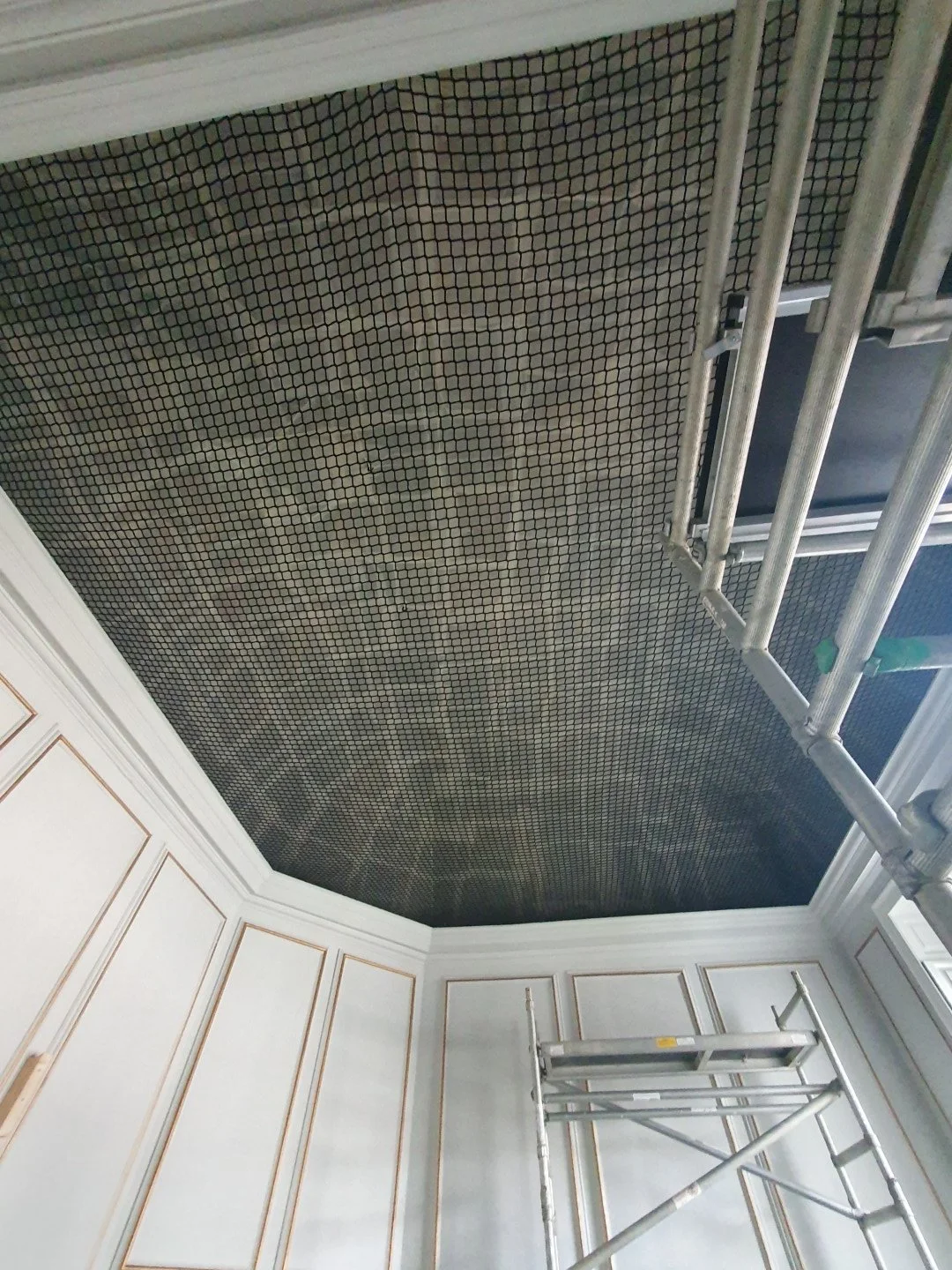
A conservation-led approach was adopted, including:
Applying Japanese tissue paper to stabilise painted surfaces
Installing fine mesh netting beneath the ceiling to capture any displaced material
Ensuring all interventions could be reversed without damaging the original finishes
This allowed structural works to proceed while minimising the risk to the artwork.
The challenges uncovered
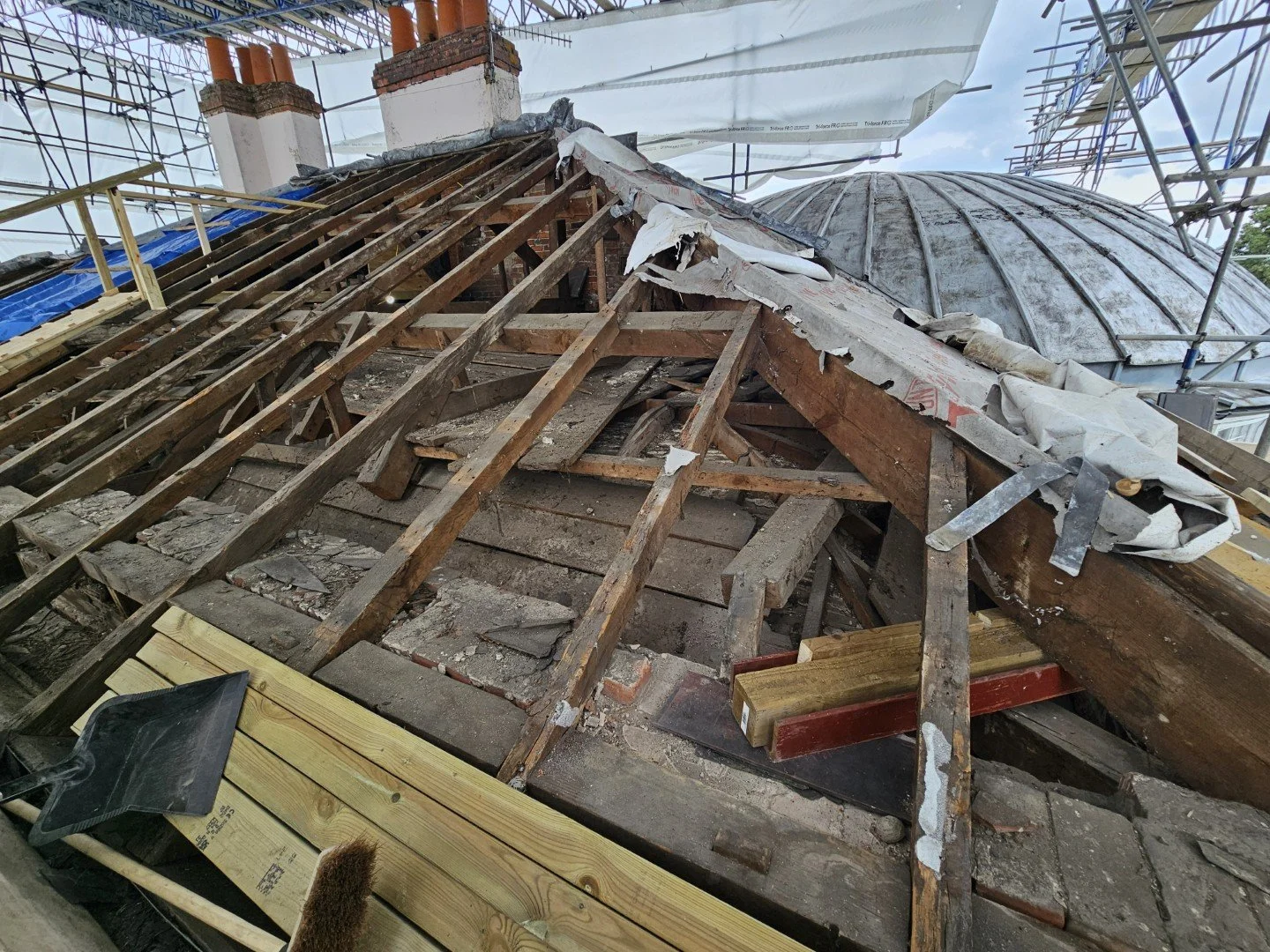
Once the roof coverings were removed and the structure fully exposed, the scale of deterioration increased significantly — a common issue in historic buildings affected by long-term water ingress.
Key issues included:
Rotten wall plates
Loss of structural capacity in valley members
Significant movement and loss of bearing
Missing ridge supports
Defective brickwork and failed gutters
Inadequate previous repairs
Deteriorated ceilings, lintels and rooflights
Structural approach and solutions
The guiding principle was clear - intervene as little as possible, but as much as necessary.
Steelwork was selected as the primary strengthening solution due to its:
Ability to be installed in sections, minimising disruption
Predictable performance
Clear distinction as a modern intervention
Reversibility in future conservation work
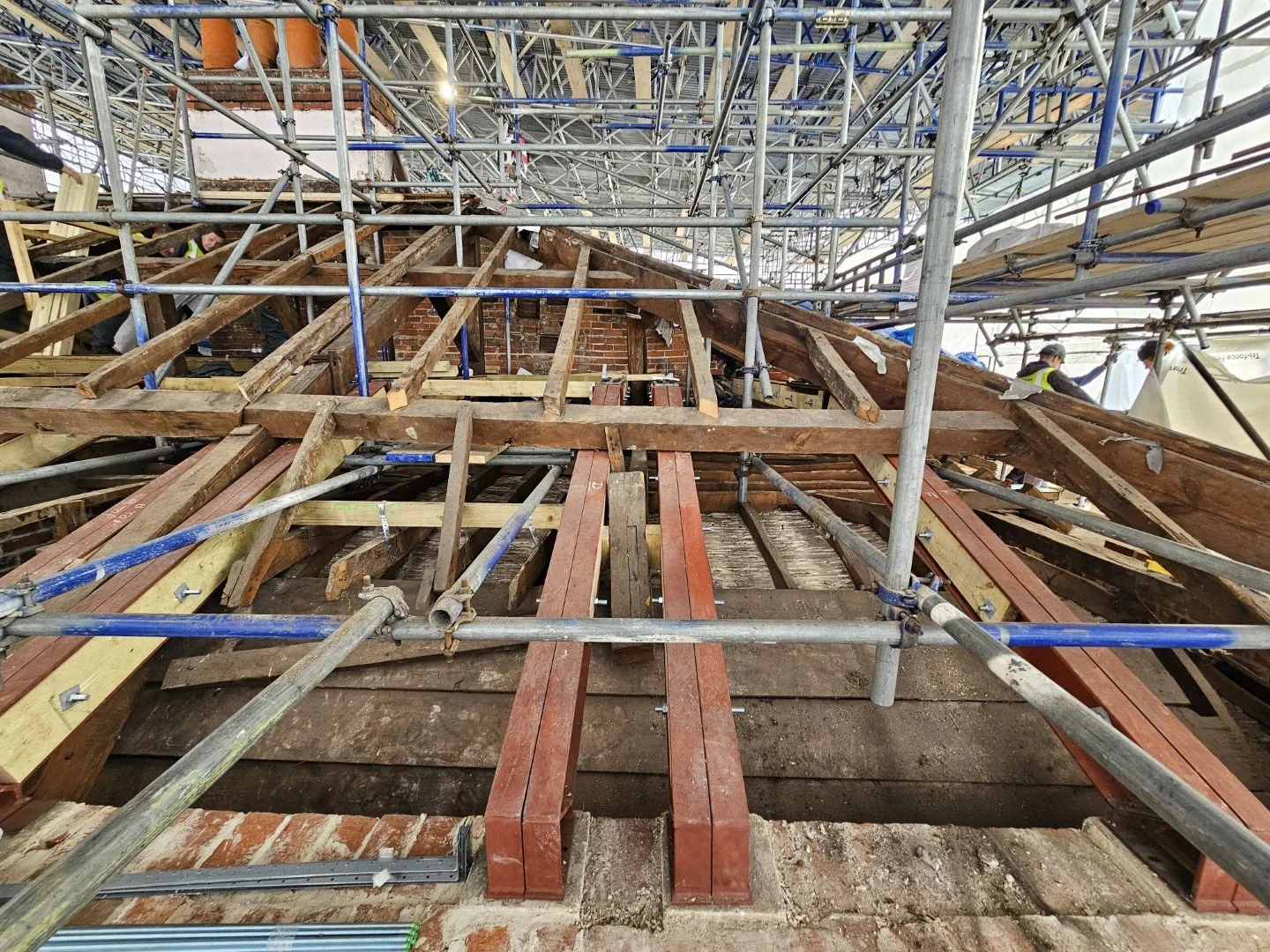
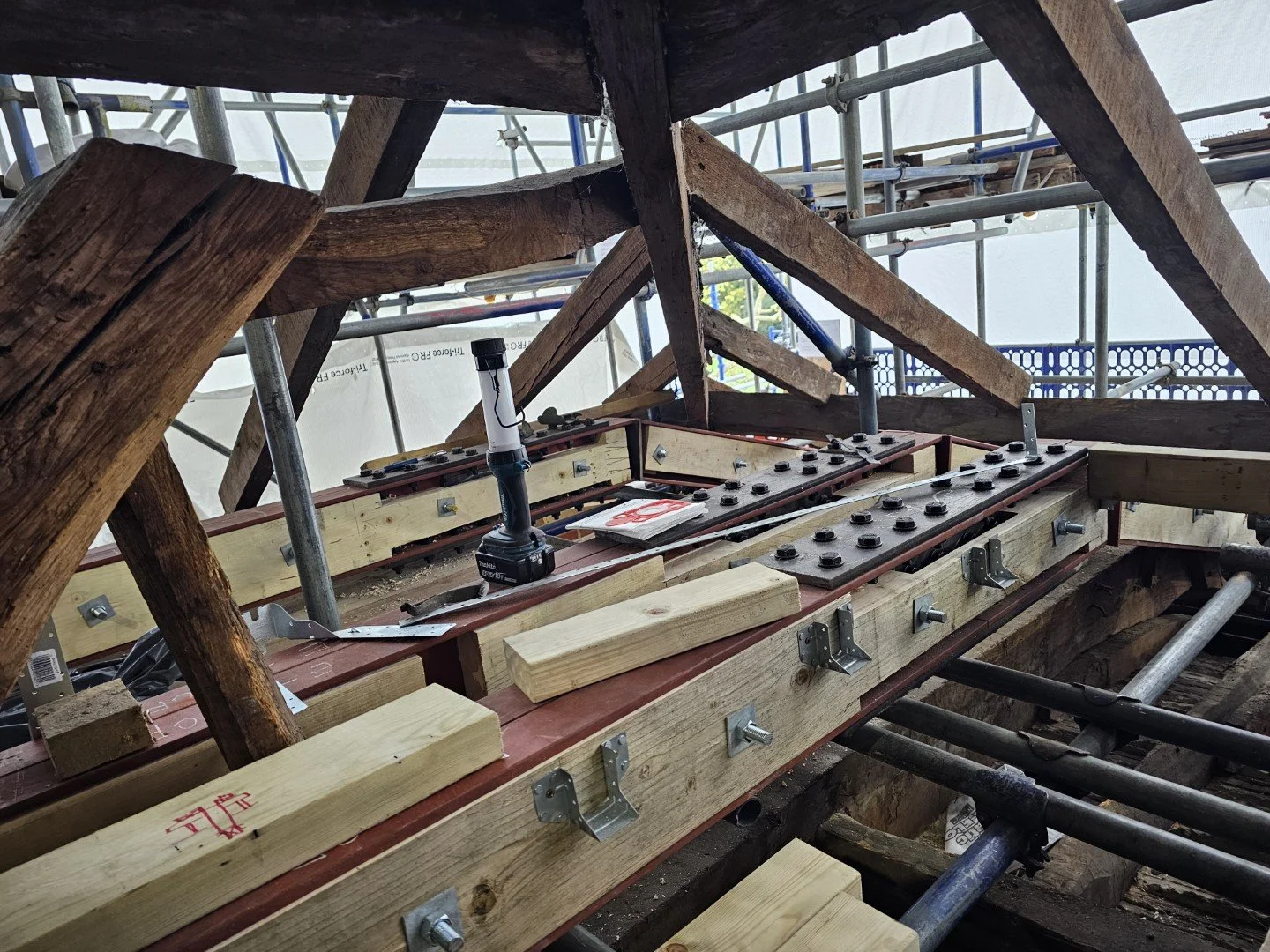
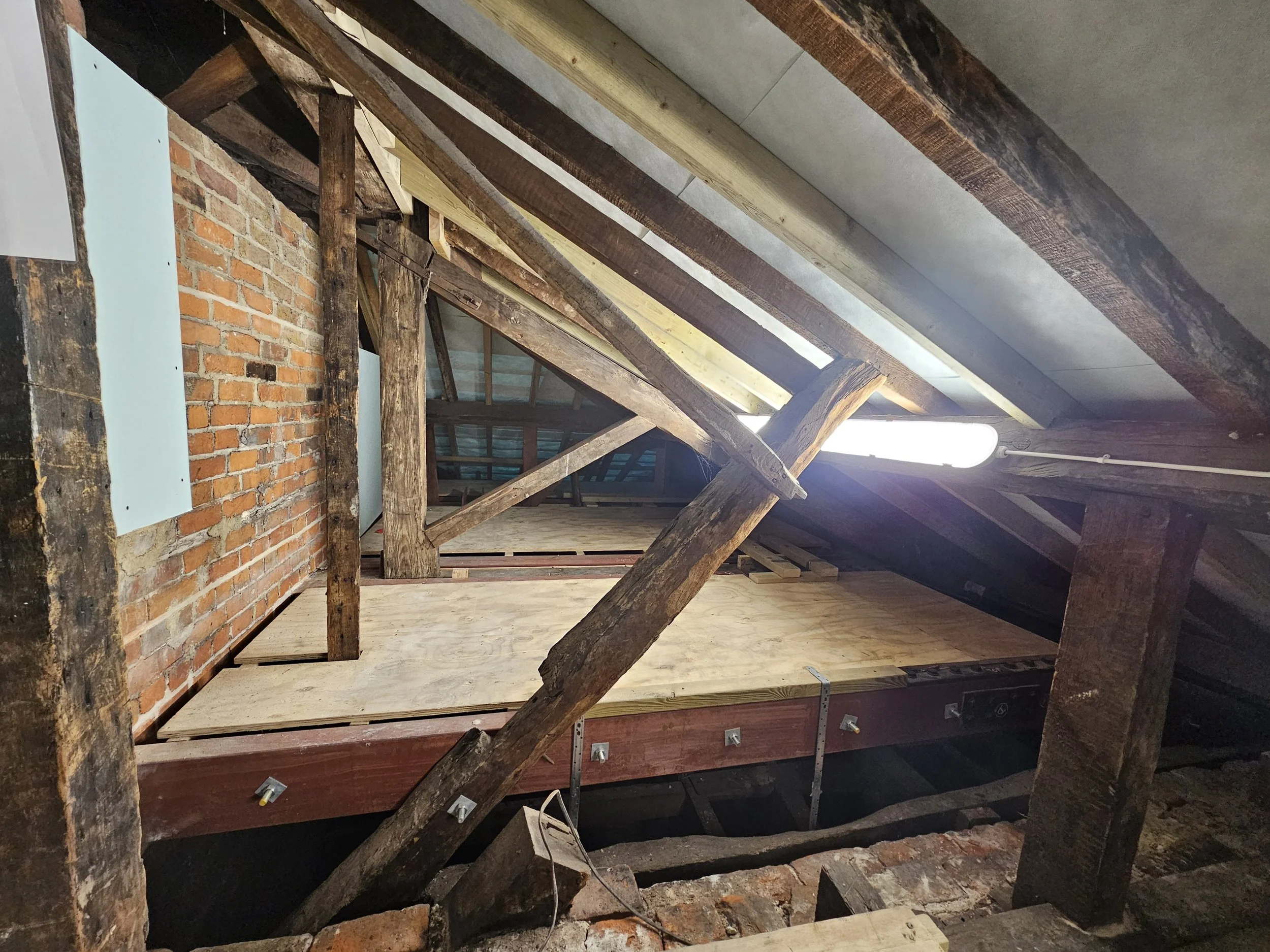
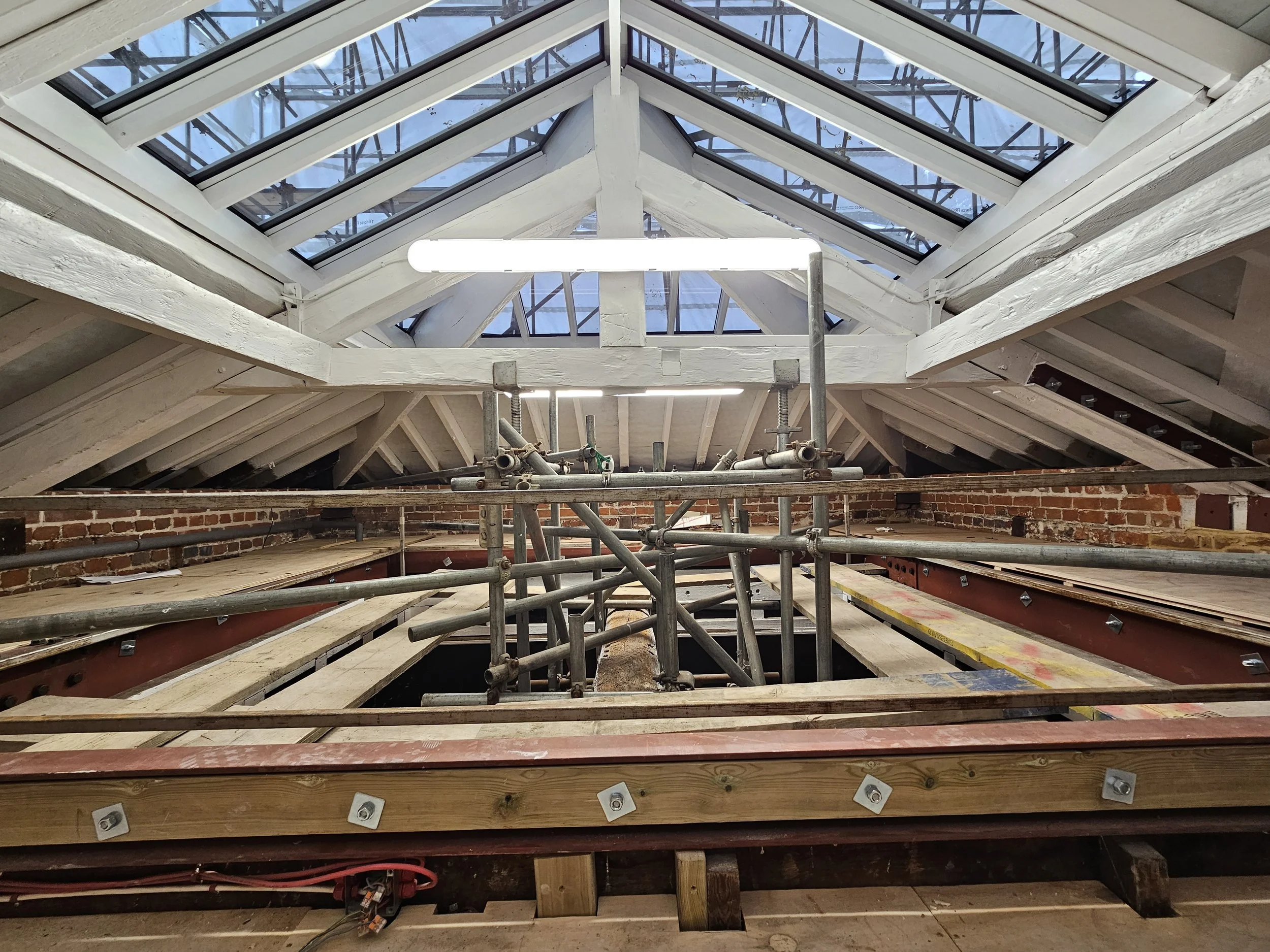
New steel channel beams were introduced alongside the existing timber members, supporting:
A new attic access floor
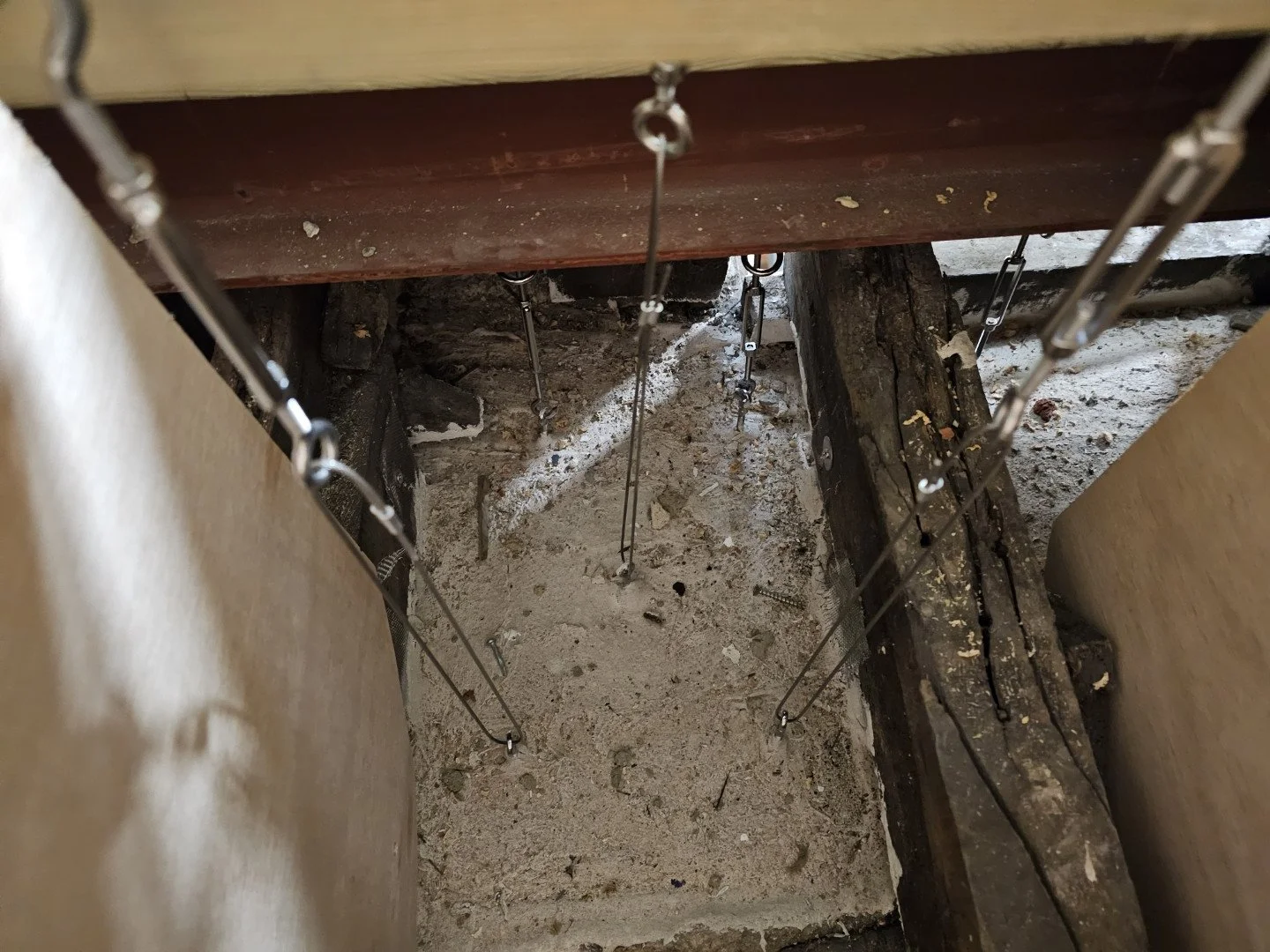
Hangers connecting down to the ceiling structure
Load transfer between external and internal masonry walls
Engineering the ceiling support
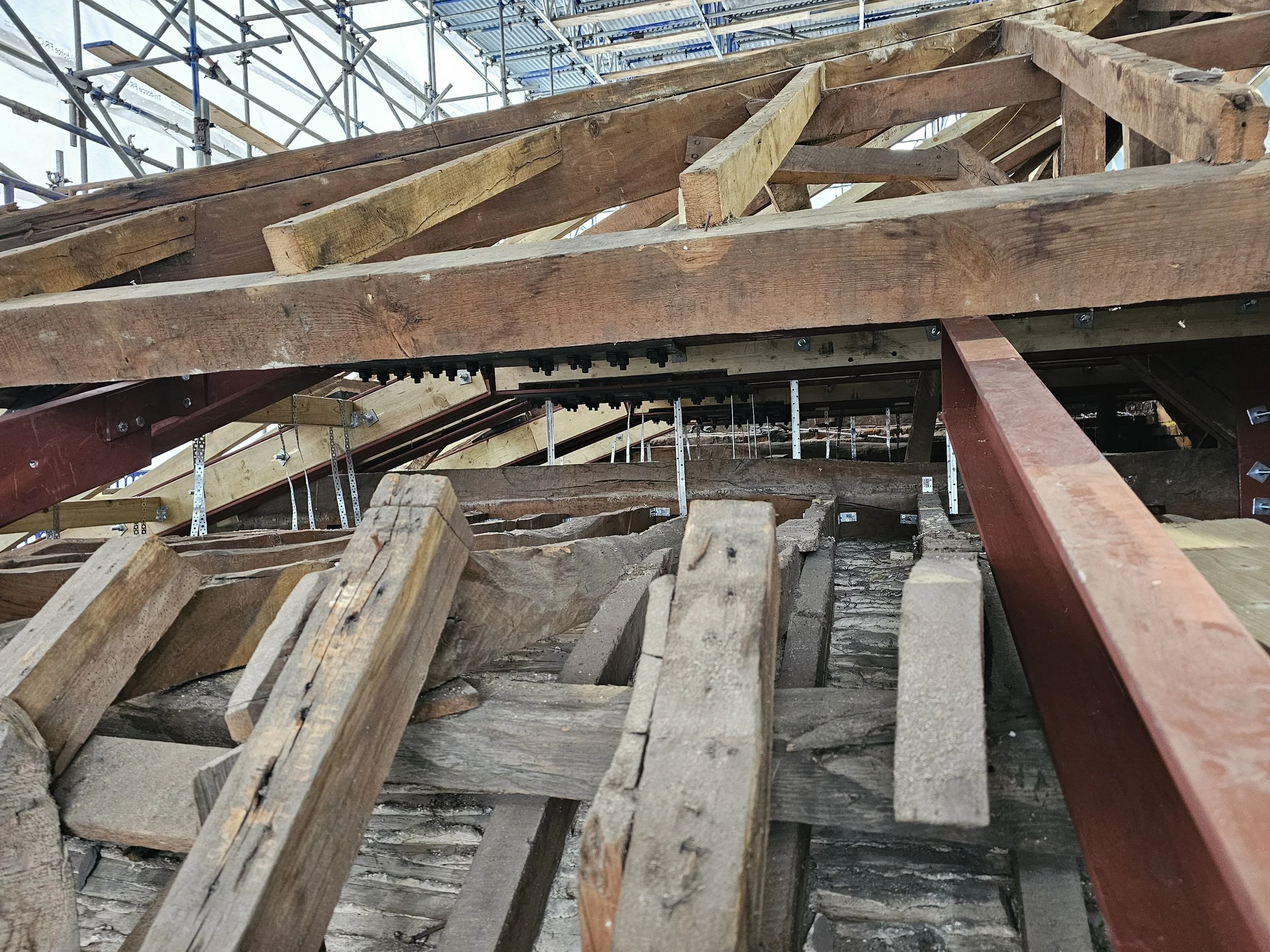
A critical consideration was the relationship between the new attic floor and the hangers supporting the ceiling.
To prevent additional load being transferred to the fragile ceiling:
Hangers were designed to act in tension only
Installation was delayed until the roof structure had fully deflected under load
This ensured the ceiling remained protected from unintended forces.
Conservation-led repair techniques
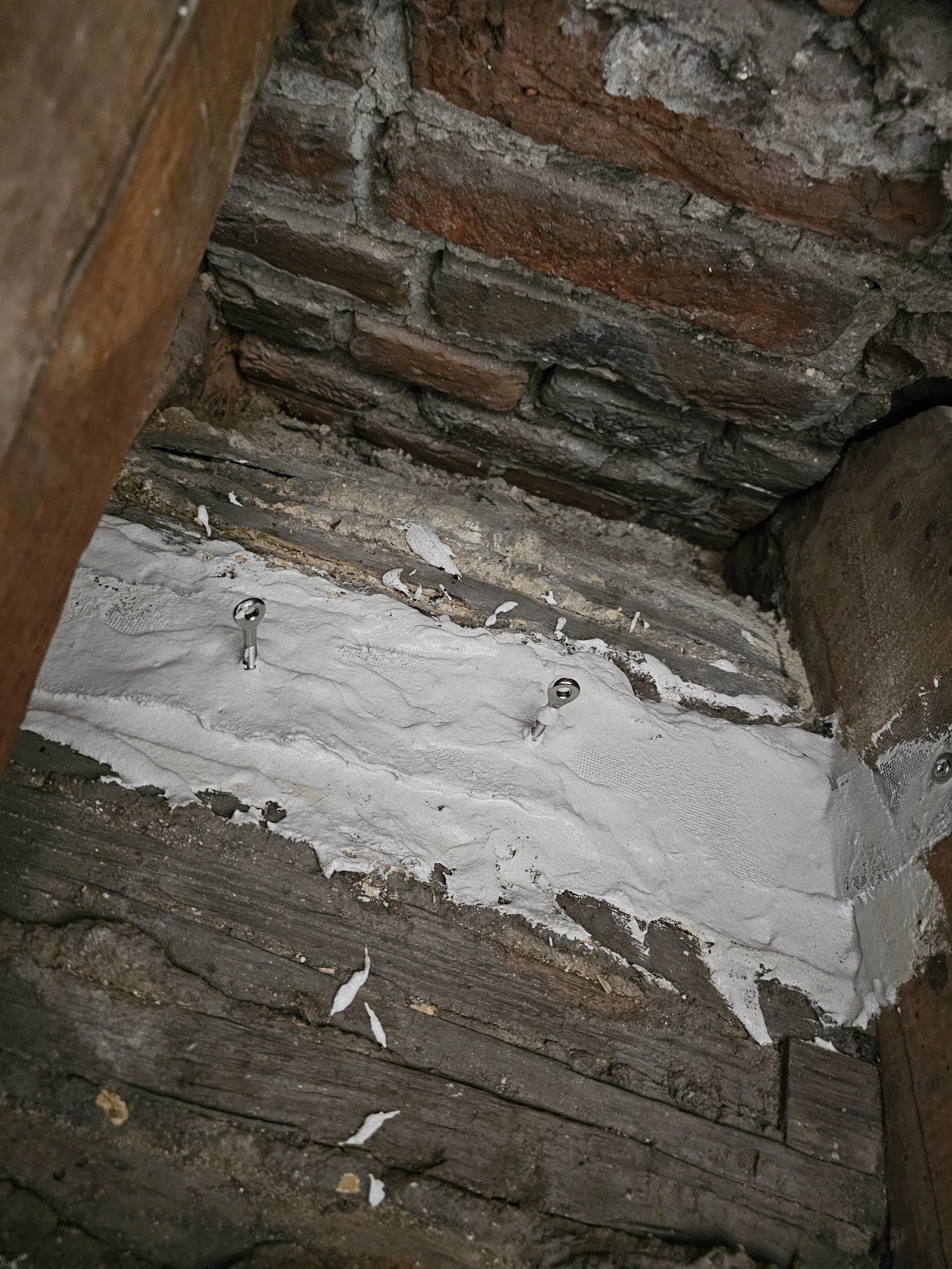
Where ceiling laths had deteriorated, the plaster was at risk of failure.
Working alongside conservation specialists Cliveden Conservation, repairs included:
Silicate mineral primers to stabilise existing material
Natural mineral adhesives with embedded stainless steel mesh
Stainless steel fixings connecting back to the new structure
This approach strengthened the ceiling while maintaining its integrity and future treatability.
A reversible approach
A key requirement from conservation specialists was that all works remained “re-treatable”.
This meant:
Minimal additional weight
No introduction of moisture-attracting materials
The ability for future conservators to access and treat the paintings
Ultimately, the risk of physical loss outweighed the impact of intervention — guiding the final solution.
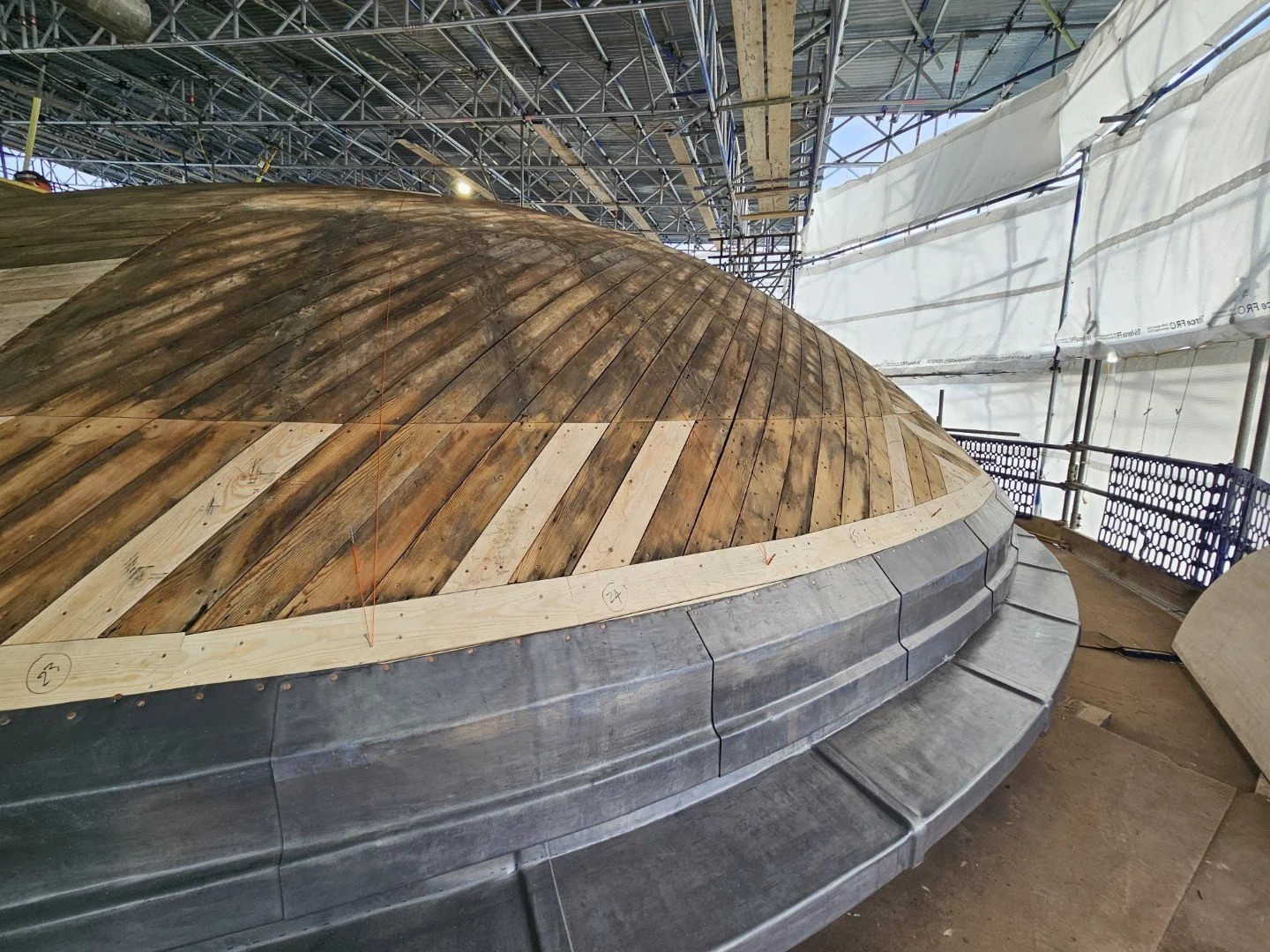
Project completion
The project ran from March 2024 through to completion in July 2025.
While all heritage projects present unique challenges, the significance of the painted ceilings made this particularly special. Through careful investigation, collaboration and precision engineering, the structure was stabilised and strengthened — safeguarding these nationally important artworks for the future.